
Sidemount diving, what is it and is it for me?

Updated: Sep 22, 2025
1. Understanding Sidemount Diving and Its Benefits
Sidemount diving is not just a fleeting fad. It's merely a different, and for many, superior method of diving. So, what makes it different? Instead of attaching tanks to your back (as in the traditional back mount setup), you carry them on your sides. This is why it's also referred to as sidemount scuba diving or simply Sidemount.
Let's analyze it step by step.
A Brief Historical Overview
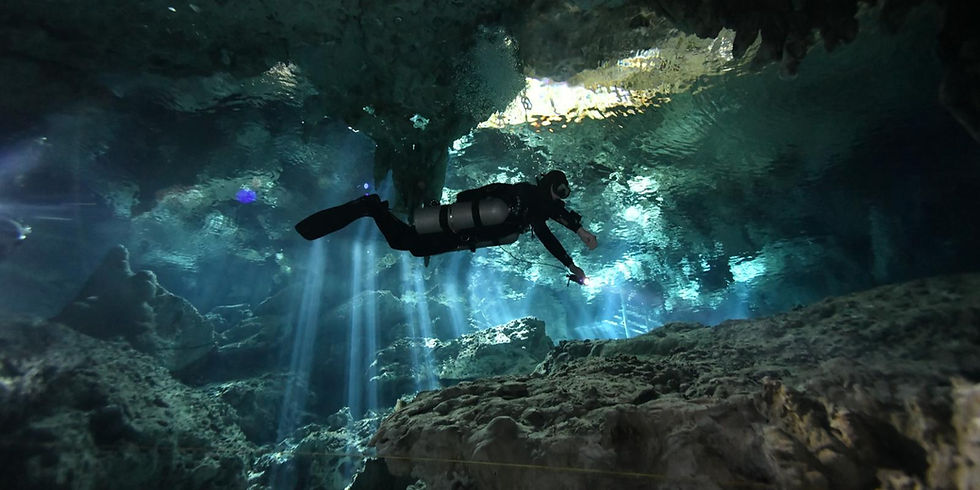
Sidemount diving originated in confined spaces, quite literally. Cave divers had to navigate through tight passages, and having one or two tanks on their backs made it impossible to pass through.
Then someone suggested, “Why not hang them on the sides?” And it was successful.
It has become so effective that it’s now not only for cave diving. It is also used in wreck diving, technical diving, and increasingly by divers seeking additional comfort, control, and safety, even when simply exploring open water.
2. What Benefits Does Sidemount Diving Offer?
Convenience and Transportation
In side mount scuba diving, you wear your harness and attach the tanks after entering the water. There's no need to carry all that weight while walking down the beach or getting into the boat.
If you have back or neck problems, sidemount diving can completely transform your experience. Seriously.
Trim and balance
Having the tanks positioned at your sides with proper streamlined alignment significantly enhances your posture in the water. You float more efficiently, swim in a straighter line, and require less effort to move.
Reduced effort leads to decreased air consumption, allowing for more time at the bottom and extended dives.
Entry into Confined Areas
Sidemount diving is perfect for navigating tight spaces where backmount setups can't go. Caves, wrecks, and crevices that were once off-limits become opportunities to explore and discover what's inside.

Safety and Redundancy
You have two tanks, two first stages, two second stages, and two SPGs. Each component is duplicated and operates independently.
If something goes wrong, you have a completely operational backup. This isn't paranoia; it's being responsible, particularly on more technical or lengthy sidemount dives.
Adaptability and Personalization
The sidemount offers a world of customization. You can adjust the harness, hoses, clips, and sidemount tanks, among other components. Every diver tailors their equipment to suit their body and diving preferences.
If you enjoy experimenting with your equipment and figuring out how everything functions, sidemount will definitely captivate you.

Who Benefits from Sidemount?
There is no one-size-fits-all answer. It varies based on your diving approach, and your objectives.
You desire greater control and security:
In that case, sidemount diving is for you.
Visible access. Backup systems. Additional ventilation.
It's particularly useful in areas with low visibility or silty bottoms.
You have problems with your back
For this very reason, many divers opt for sidemount.
It's more comfortable both in and out the water.
You're considering technical diving
Sidemount offers you greater opportunities for development.
It's the preferred configuration for caves, wrecks, and advanced methods.
Increased gas. Greater independence. Enhanced freedom.
You take pleasure in trying out different equipment and improving your abilities.
From modifying the harness to attaching tanks and personalizing your configuration,
Sidemount scuba diving is specifically designed for divers who prefer a hands-on approach.
It can be fully customized.
If you're passionate about "gear nerd" topics, it's sheer delight.
There's a significant difference between simply carrying your gear and having your gear move seamlessly with you.

Understanding the Essential Gear for Your Sidemount Diving Setup
Sidemount diving is more than just an alternative method for carrying your tanks. It’s a complete philosophy. And like all great things, it begins with the equipment.
There’s no “I just wear whatever they give me” here. No way. You create your sidemount scuba setup. You comprehend it. You customize it to fit you. And honestly… that’s what makes it incredible.
The Sidemount Harness
This is the core of your sidemount diving equipment. There isn't one "correct" way to wear it, but there are some important considerations to keep in mind.
What truly matters? That the harness fits snugly against your body, doesn’t shift at all, and that every D-ring is precisely where you need it.
If you're planning to invest in something, choose the best sidemount rig you can afford. Believe me, it makes a significant difference. You cant go wrong with an Xdeep.
Tanks on the Sides: What Sets Sidemount Apart
In a sidemount scuba configuration, the tanks are positioned at your sides. This alters the entire experience.
You need to make a careful choice
Size: Aluminum 80s are the most popular choice, though some people favor steel.
Pressure: Not every filling station pumps to 200 bar. Verify before diving.
Buoyancy: As aluminum tanks empty, they become positively buoyant. But no problem, their position can be altered while diving.
Next is the delicate part, the rigging.
Sidemount tank rigging involves attaching clips, bungees, and gear to ensure the tanks remain aligned, close to your body, and stationary. No swinging. No tanks flying backwards. No resembling a Christmas tree.
Proper sidemount tank rigging is essential for smooth and balanced diving.
Regulators, Not Every Setup Will Suffice
In sidemount, the arrangement of your regulators is different.
You`ll need;
Two separate first stages. Ideally with swivel turrets and a 5th port.
A regulator with a hose approximately 60–70 cm long.
A regulator of at least 2 meters for air sharing if necessary.
Each tank must always have its own pressure gauge. And featuring tidy routing, no loose hoses, and constant easy access.
It's about functionality, not appearance. In an emergency, it could be life-saving.
Weight and Buoyancy The Importance of Balance
Sidemount diving is well-known for its trim.
However, if your weight isn't evenly distributed, regardless of how good your setup appears, it won't function properly.
Here are some tips: Distribute weight as needed, beginning down your spine.
Adapt to your suit: wetsuit, drysuit, shorty… everything varies.
The objective? Remain flat, like a board, and avoid struggling to maintain your position underwater.

The Essential Sidemount Course for You
Interested in sidemount diving? Great. But be aware... It's not just about altering how you carry your tanks. It's about doing it correctly. And to achieve that, you need one essential thing: A comprehensive sidemount course.
Why enroll in a sidemount diving course? Because improvising underwater isn't an option. If you plan to become a sidemount diver, you need to commit fully. A sidemount diving course with an experienced Instructor offers you,
Authentic, proven, and safe methods.
Complete management of trim and buoyancy.
Efficient and safe gas management
Well-established and rehearsed emergency procedures.
Convenient and complete access to your valves and regulators.
And something even more crucial: The reassurance that you truly understand what you’re doing.
What do you learn in a sidemount diving course?
A quality sidemount scuba course combines both theory and practice. The theoretical part explains the reasons behind sidemount diving:
The basics of sidemount diving.
Gear setup instructions, step-by-step.
Considerations for safety.
Managing gas from two separate tanks.
Ensuring your harness fits perfectly.
Setting up your tanks so proficiently that you could do it blindfolded.
Mastering the art of being in trim.
Mastering professional troubleshooting skills.
And ultimately… it feels as if you were born with tanks at your sides.

Who is eligible for a sidemount course?
Possess your Open Water Diver certification (or its equivalent).
Some prior experience (many dive centres require a minimum of 25 dives).
A true enthusiasm for learning, discovering, and venturing beyond the usual.
With that being said…
If you're already at the Advanced or Rescue level, or eager to start technical diving…
You will really enjoy this sidemount course.
Frequently Asked Questions About Sidemount Diving
Is sidemount diving safer? Yes. But remember, it’s not a miracle solution. Sidemount scuba can be safer if you know what you’re doing. You have two tanks, two regulators, and two independent air sources, with full access to your valves without needing acrobatics. This provides more control in emergencies. However, it all hinges on proper training and practice. That’s why enrolling in a sidemount diving course is crucial.
Is sidemount challenging to learn? Not in the least. It’s just different, which doesn’t equate to being difficult. For those who are already divers, learning sidemount is akin to progressing to a more advanced stage. There’s a minor learning curve: a new harness, tanks placed on the sides, and a bit more technique required. Nonetheless, with a proficient instructor and some practice dives, it’s completely manageable. Once you become proficient, you might not want to go back to backmount.
What types of dives can I do with sidemount? Nearly any type! Well…almost. Sidemount originated for cave and wreck diving. However, nowadays, recreational divers also use it for reef explorations, easy dives, and tropical trips. The benefits: You can fit into narrow spaces. Carry more gas without fully committing to technical diving. Excellent buoyancy. Maximum comfort. Seeking more freedom and independence underwater? Then sidemount is your new best friend.
Can I use my regular dive gear for sidemount? Not quite. However, you can modify some of it. Here’s what you’ll definitely need: A harness specifically designed for sidemount. A sidemount BCD (backmount BCDs are not suitable). Tanks equipped with clips and bands for sidemount use. Regulators set up for sidemount.
What is the cost of a sidemount scuba setup? It varies depending on the level of quality you desire. Here's a general estimate: • Harness + wing (top sidemount BCD): €400–800 (approximately 430–860 USD) • Sidemount regulator set: €500–1000 (around 540–1,080 USD) • Accessories (clips, bands, weights, etc.): €100–200 (about 110–215 USD) Total estimated cost for a complete sidemount rig,Between €1000 and €1800 (roughly 1,080 to 1,950 USD). Remember: This is a long-term investment. And if you're considering tech diving, this is the first step.
The prices provided are estimates and can differ based on the supplier, country, or equipment details.
So to conclude, Sidemount ticks so many boxes and is a great configuration for many types of diving.


Comments